
Outdoor Cable Ties: Choosing the Right Type for Outdoor Use
Outdoor cable ties need to withstand conditions that standard indoor products may not encounter, including prolonged sunlight, heat and changing weather. Choosing the correct material and size can improve cable management reliability in electrical, industrial and infrastructure installations.
Why UV Resistance Matters
Standard nylon cable ties are widely used because they are lightweight, economical and easy to install. However, prolonged exposure to ultraviolet radiation can affect nylon over time.
For outdoor applications, UV-resistant black nylon ties provide a more suitable option. Manufacturers such as KSS add carbon black to the nylon material to improve resistance to ultraviolet exposure.
Importantly, colour alone should not determine whether a cable tie is suitable for outdoor use. A black cable tie should still be specifically manufactured and identified as UV resistant if it will experience prolonged sunlight.
KSS UV-Resistant Nylon Range
KSS Weatherproof Cable Ties are manufactured from black Nylon 66 and incorporate carbon black to improve UV resistance for outdoor applications.
The range is available in numerous lengths, widths and tensile strengths, allowing installers to select a tie according to both the cable bundle size and the mechanical requirements of the installation.
Depending on the size selected, applications can range from small cable and conductor bundles through to larger industrial cable management requirements.
Typical applications include:
- Outdoor electrical installations
- Cable and conductor management
- Switchboards and electrical equipment
- Solar and renewable energy installations
- Telecommunications equipment
- Industrial machinery
- Infrastructure projects
- General outdoor cable bundling
When selecting a tie, consider more than just its length. Width, maximum bundle diameter and minimum loop tensile strength can also affect whether a particular size is appropriate.
Weatherproof vs Standard Nylon Cable Ties
For protected indoor applications, a standard natural nylon cable tie may provide a practical and economical solution.
However, when the installation will experience significant exposure to sunlight, a purpose-made UV-resistant product is generally the better choice.
The distinction is particularly important where cable ties form part of a permanent installation rather than temporary cable management.
Therefore, before selecting a product, consider:
- Whether the installation is indoors or outdoors
- Exposure to direct sunlight
- Required cable bundle diameter
- Required tensile strength
- Ambient operating conditions
- Exposure to chemicals or contaminants
- Expected installation life
- Applicable project or equipment specifications
These factors can help determine whether standard nylon, UV-resistant nylon or another material is required.
When Should You Use Stainless Steel Cable Ties?
UV-resistant nylon is suitable for many outdoor electrical applications. Nevertheless, some installations require greater mechanical strength, temperature resistance or environmental durability.
In these situations, stainless steel cable ties may provide a more appropriate solution.
Stainless steel options are commonly considered for demanding industrial, infrastructure and exposed environments where the installation conditions exceed the capabilities of conventional nylon products.
Coated stainless steel ties are also available where additional separation between the metal tie and the cable or equipment surface is desirable.
The correct choice ultimately depends on the environment and the requirements of the installation.
Choosing the Correct Cable Tie Size
Cable tie length determines the maximum bundle that the tie can accommodate, while width generally influences its mechanical strength.
For example, the KSS UV-resistant range includes compact 100 mm ties as well as substantially longer versions for larger cable bundles. Wider heavy-duty options are also available where greater tensile strength is required.
Before ordering, check:
Bundle diameter – Measure the completed cable bundle rather than estimating from individual cable diameters.
Tie length – Allow sufficient length for installation and engagement with the locking head.
Tie width and tensile strength – Larger or heavier cable bundles may require a wider, stronger tie.
Environment – Confirm UV, temperature, chemical and other environmental requirements.
Installation specification – For engineered projects, always follow the applicable project, equipment or manufacturer requirements.
Cable Ties for Electrical and Industrial Applications
Engineering Supplies stocks a broad range of cable management products for electrical, industrial and infrastructure applications.
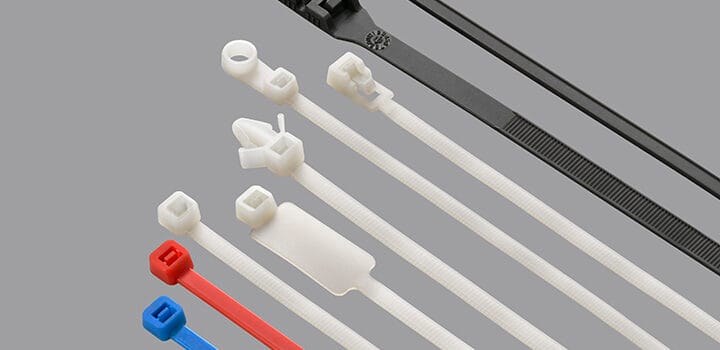
Our Cable Ties range includes:
- UV-resistant black nylon cable ties
- Natural nylon cable ties
- Stainless steel cable ties
- Coated stainless steel cable ties
- Releasable cable ties
- Mounting cable ties
- Marker cable ties
- Coloured cable ties
- Heavy-duty options
This allows installers to choose a product based on the actual installation environment rather than using the same type of cable tie for every application.
Shop KSS Weatherproof Cable Ties
For outdoor applications requiring a UV-resistant nylon solution, view our KSS Weatherproof Cable Ties (Black) range.
Multiple lengths, widths and pack quantities are available to suit different cable management requirements.
Alternatively, browse our complete Cable Ties range for nylon, stainless steel and specialist options.
Engineering Supplies can also assist with selecting cable ties and cable management accessories for electrical, industrial, infrastructure and project applications throughout Australia.